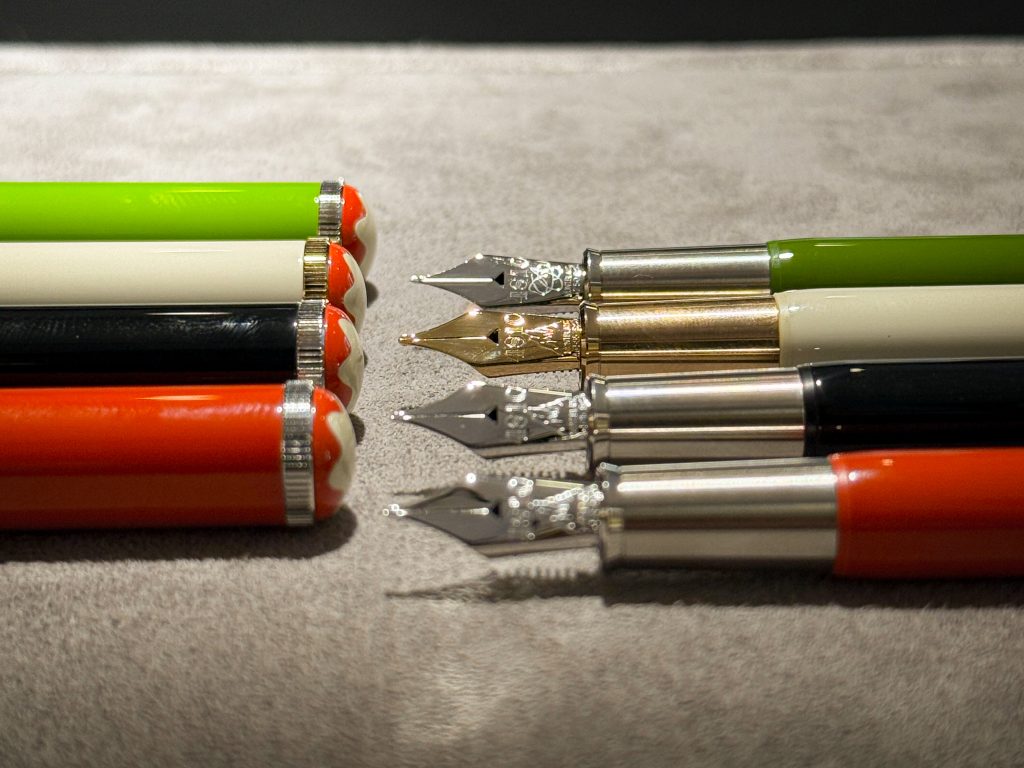
From a simple red dot, to an entire brand.
The Rouge Et Noir is the oldest collection from Montblanc. Introduced in 1906, it was founded by three men: a Hamburg banker, Alfred Nehemias; a Berlin engineer, August Eberstein; and an entrepreneur, Claus-Johannes Voss.
The History of Rouge et Noir
The first piece they made was called the Safety Pen. But why did they call it the Rouge Et Noir? First, the French name was a matter of formality, as French was commonly used in business during those times. However, make no mistake, it is made by a German brand.
Before the brand became Montblanc in 1910, it had a different name. From 1906 to 1909, it was called the Simplo Filler Pen Co., and then Montblanc Simplo GmbH until 1934. Because of this, you will find that early Montblanc pieces did not have a star on the cap. Instead, they just had a red dot—hence the “Rouge”. The “Noir” came from the black body, which was quite common back in the day. The red dot was used to indicate that the Rouge Et Noir was a pen that would prevent leaking when capped.
The Full Range
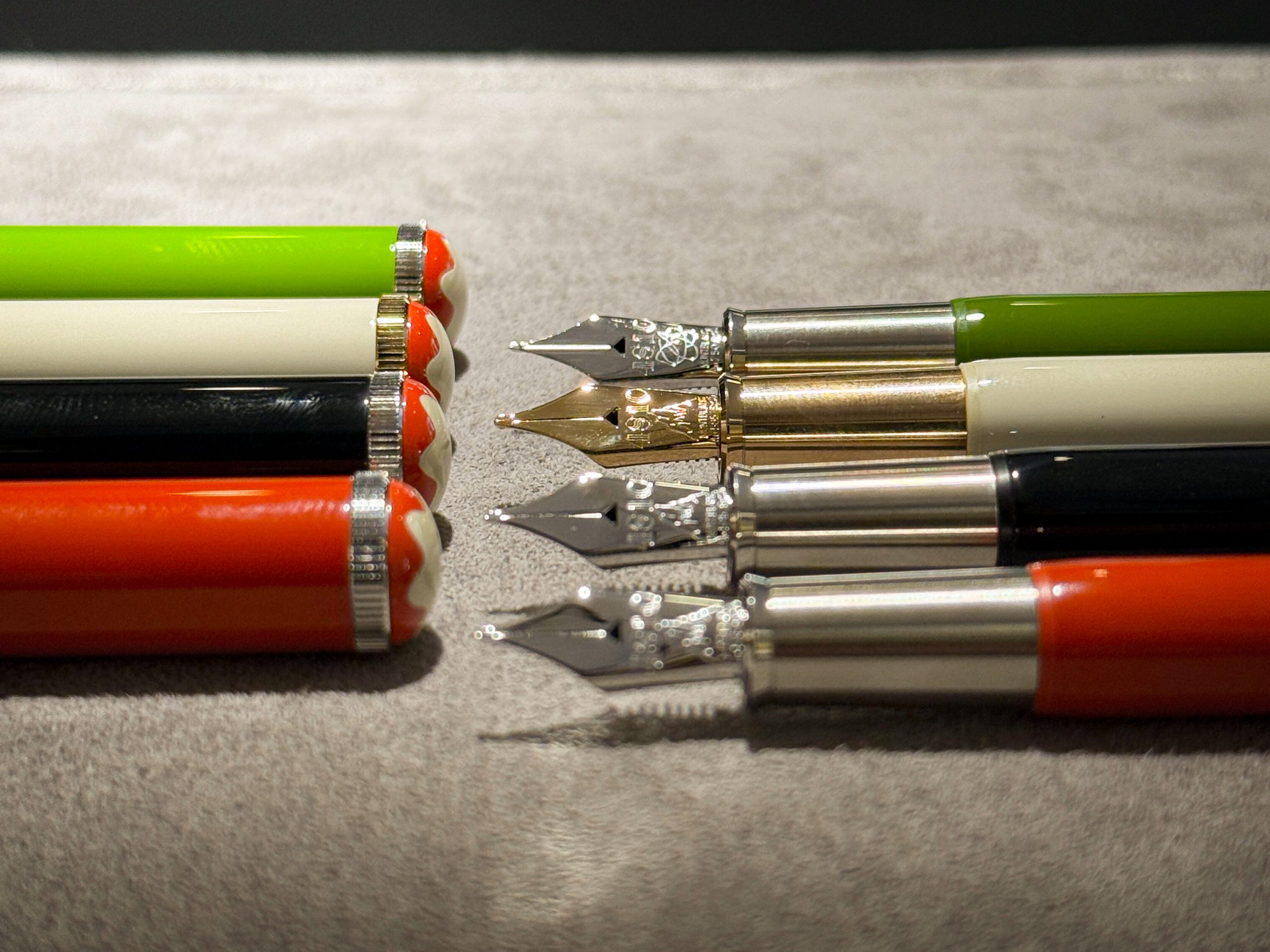
There was a variety of pieces differing in size, color, and build. Today, we will focus on the Baby, inspired by the model of the 1920s. The modern Baby comes in four variations: Black, Ivory, Coral, and Green. As of now, the Black, Ivory, and Coral are standard versions featuring an Au 585 nib that writes extremely smoothly. The bodies are made of lacquer, which is painted on to create the feel. The piece is relatively heavy for a small pen due to its full metal construction, unlike the standard Meisterstück and Starwalker. The only limited edition Baby currently in the range is the Schreiberling by Wes Anderson (Limited Edition 1969). It uses two shades of green lacquer, with yellow lacquer for the end, and an Au 750 nib. All Baby pieces also feature a coral cap as a tribute to the collection’s history.
All four pieces share the same construction, utilizing a small body (cartridges only) and a cap with two different fittings. One is a screw that you can use to attach the cap to the back; the other is a pressure fit to cover the nib. It is a pocket-sized pen, but the weight more than makes up for its size, just as intended in the past.
The “Schreiberling”
Let’s take a dive into the Wes Anderson LE 1969. Just as in his movies, the piece uses unconventional colors. What is also special is that the person who helped design this piece is still with us; while most Montblanc pieces pay tribute to historical figures, this one is unique.
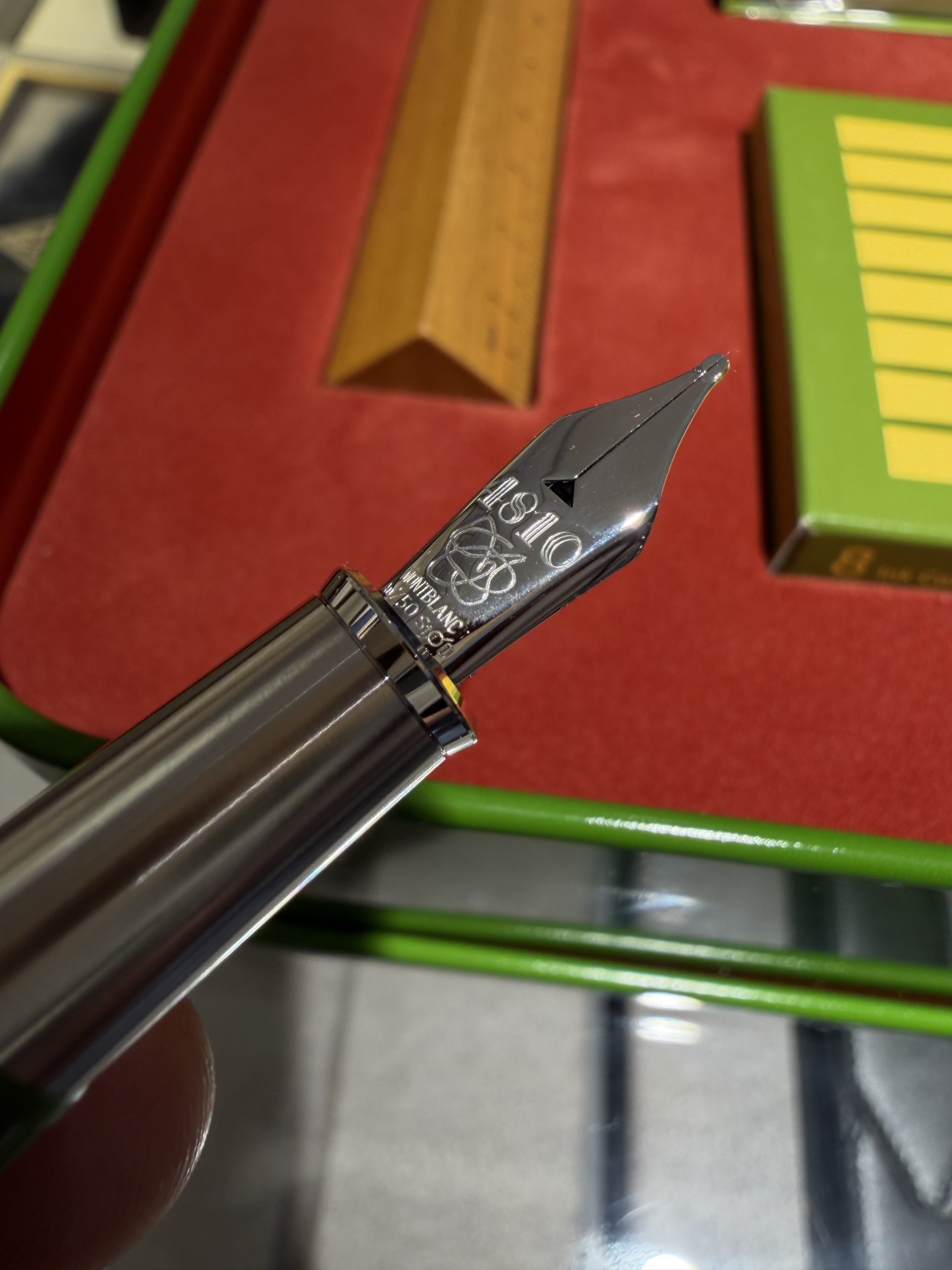
Unlike the other nibs, which include a drawing of the Montblanc mountain and are made of Au 585, this piece features a scribble on the nib—hence the name “Schreiberling.” It also uses an Au 750 nib, marking the first time we see this in the Baby collection.