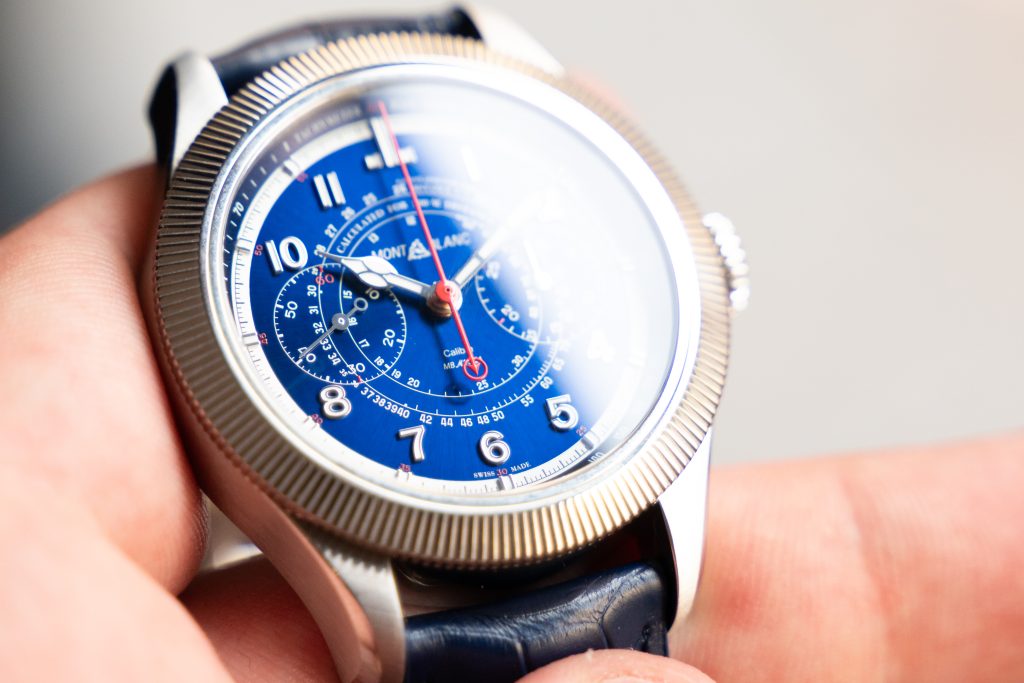
Let us start with the Limited Edition 100. This piece was produced in 2023 to celebrate the evolution of the chronograph.
In 1927, Minerva was one of the first to develop the fluted bezel for pilots to time their trips using a chronograph. Utilizing this invention on the new Montblanc 1858 Timekeeper, they decided to try something new: what about removing the pushers from the case? But let’s go a step further—what about no pushers at all? An engineering nightmare at the time, we could not find a single chronograph without any pushers. And yes, even the JLC AMVOX does not count. Although it is remarkable that by pushing the glass you can start, stop, and reset the timer, you still have to push the glass; therefore, it acts as a pusher. The Rolex Yacht-Master II still needs pushers to function as well, even though the bezel activates the complication.
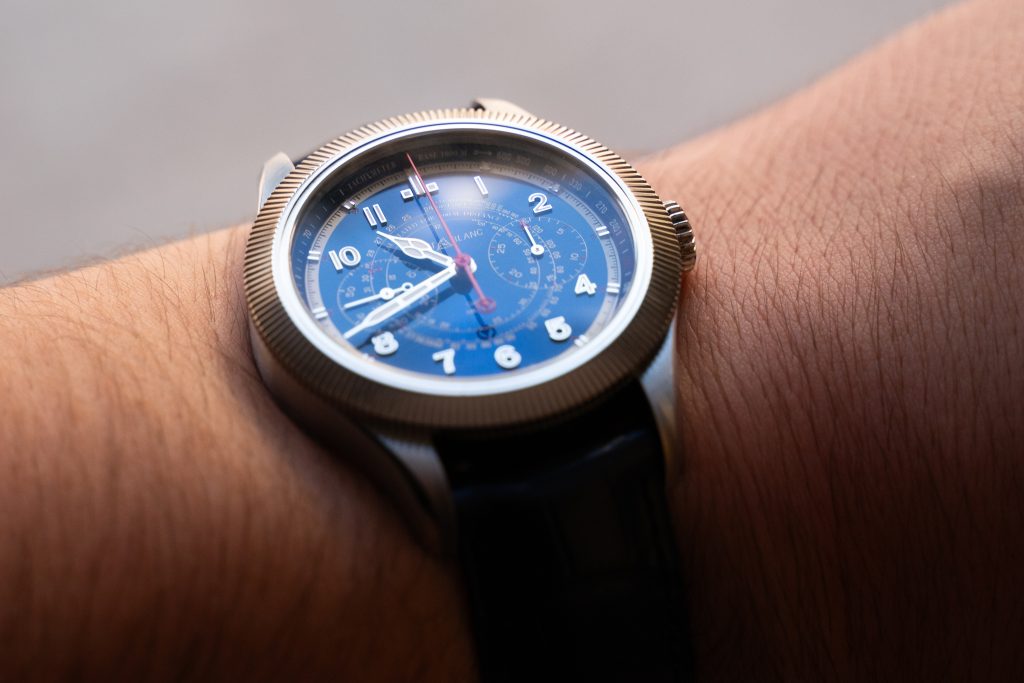
The Montblanc 1858 Timekeeper operates using the bezel with a three-click clockwise rotation: the first click is start, the second click is stop, and the third click is reset. The first of its kind to our knowledge, the bezel is always crafted in AU 750 solid gold, and the case is constructed of stainless steel at 42.5mm across.
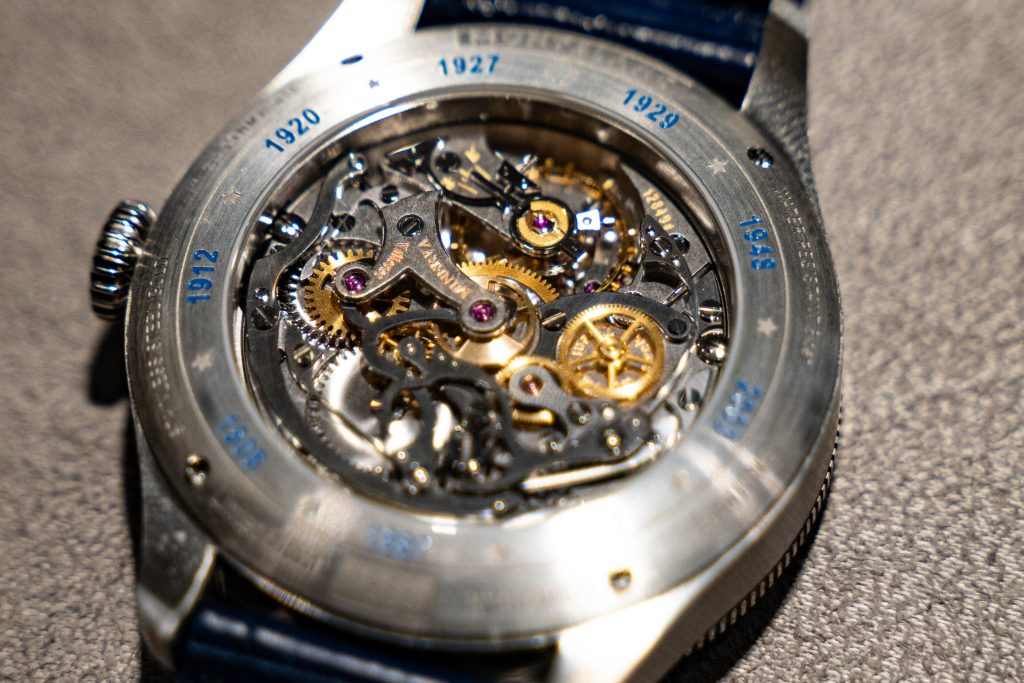
The movement of this piece is the M13.21. Of course, it has been slightly modified for the bezel function. It is a hand-wound movement with a 60-hour power reserve. As per Minerva standards, the movement is made of German silver, also known as maillechort, which is known for its resistance and is highly regarded in watchmaking. You will see fully beveled edges in this piece, both where you can see them and where you cannot. The piece also includes the “demontage” hook and snail finishing above the mainspring barrel—one of the world’s highest levels of finishing, with Montblanc being the only manufacture left who can achieve this.
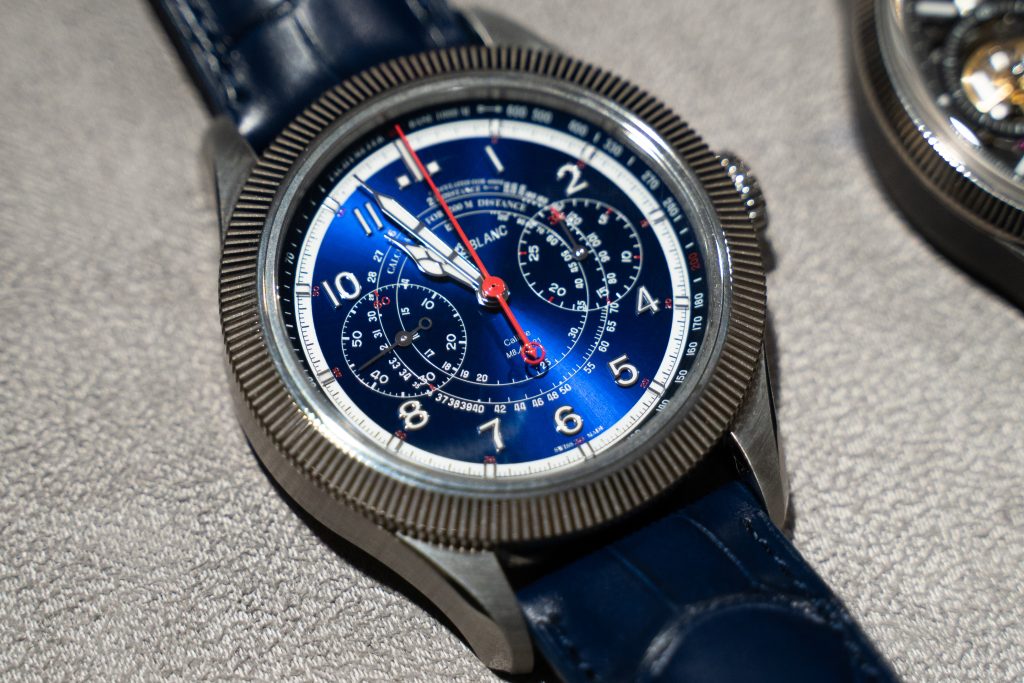
The meaning of the dates on the case back
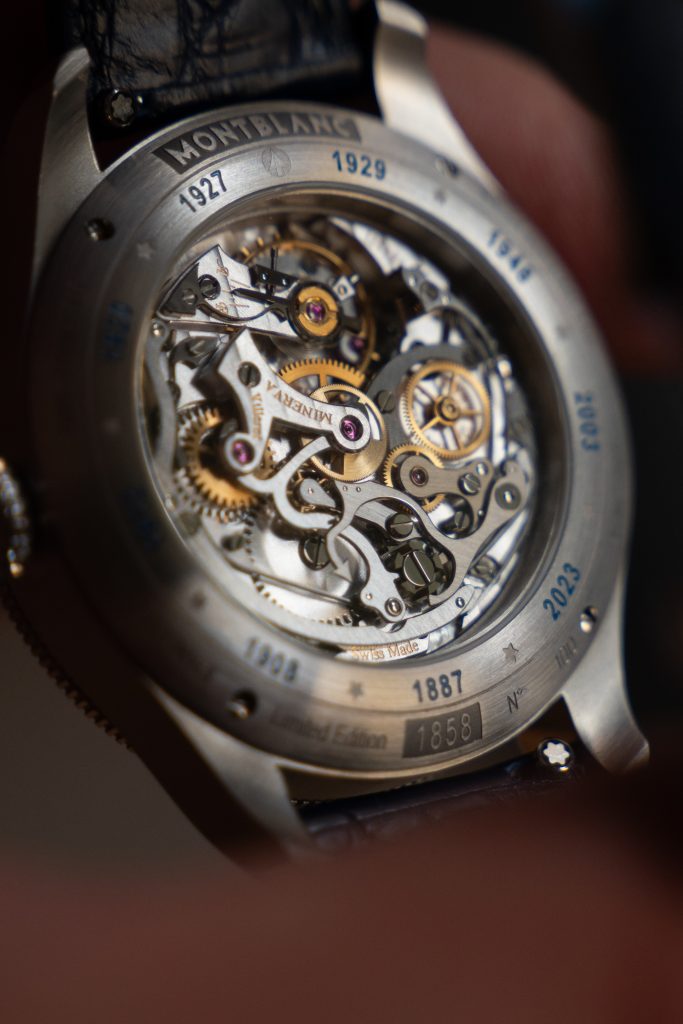
The Limited Edition of 28 is made in AU 750 lime gold, a unique blend of solid gold that only Montblanc has used to date.
The case of these pieces, of course inspired by the military feel and by historic Minerva pieces, holds a secret. You have a few selected dates on the back: 1858, 1887, 1908, 1912, 1920, 1927, 1929, 1948, 2003, and 2023. But what do these dates mean, and why are they so important?
1858: Refers to the founding of the Minerva factory, when Charles-Yvan Robert and Hyppolite Robert founded the H. & C. Robert watch company.
1887: Refers to when the name Minerva was patented. Montblanc still possesses most of their patents today.
1908: When Minerva made their first full in-house chronograph movement, the Calibre 19/9CH, made for pocket watches.
1912: The patent of the V-shaped bridge on the movement, made of maillechort on April 10, 1912, inspired by the V-shaped mountain in front of the factory.
1920: The manufacture of the Calibre 13.20, specifically made for wristwatches.
1927: Minerva produces their first fluted bezel and inner rotating crown.
1929: Minerva Calibre 17.29. As its predecessor, the 13.20, was made for pocket watches, this updated version was the first chronograph for wristwatches.
1948: Minerva introduces the Pythagore Calibre 48. They created this movement and designed it using the golden ratio (φ = 1.618).
2003: A set of modern calibers were made, the MB M13.21 and the MB M16.29, paying tribute to the previous calibers they made.
2023: The launch of this very watch, the first time their fluted bezel functioned in such a way.